Remedial & Sports Massage
in Bristol
Deep(er) tissue massage for people living in or around Bristol.
What is Remedial & Sports Massage (RSM)?
Suitable for people of all ages and activity levels, RSM treatment has two main branches; the Remedial aspect predominantly focuses on treating a specific injury or painful condition, and the second “Sports” part of RSM is orientated toward general recovery and improving performance.
Elements from each branch often overlap during treatment which is why RSM is known by one collective name rather than two distinct forms of therapy.
Both Remedial therapy and the Sports massage include assessing posture, mobility, movement patterns and muscle imbalances, although, Remedial massage will typically involve a more in-depth and detailed approach. By taking the entire body into consideration, the treatments can be tailored and optimsed to your specific goals. Pain in one part of the body can result from an adaptation to weakness, dysfunction or an old injury in another part of the body.
My treatments aim to improve pain free movement of the affected area and also address the underlying causes to prevent painful episodes from re-occurring.
You can read more about Remedial vs Sports massage in the FAQ
Techniques Used
Once identified, the target area(s) can be treated with various techniques to ease pain and help your muscles get back to full health, including:
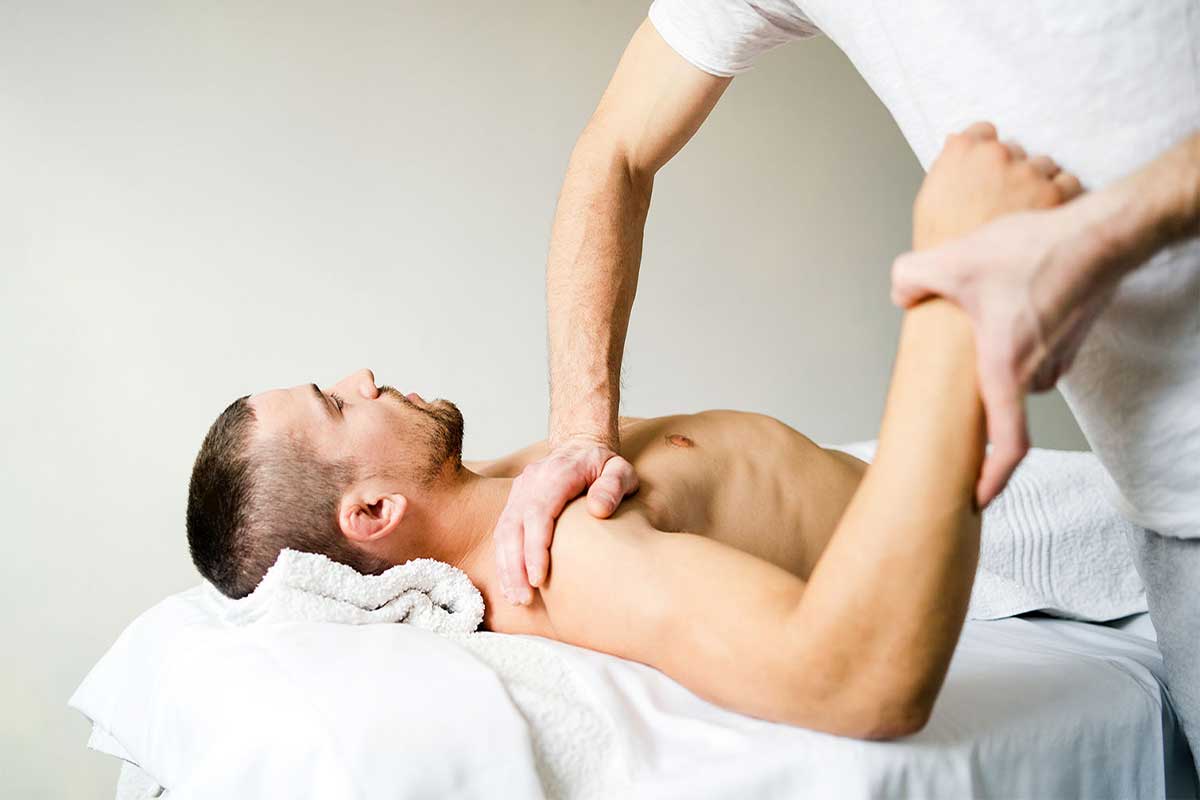
- Active/passive soft tissue release
- Joint mobilisation
- Muscle stretching (MET, PNFS)
- Myofascial release
Treatment Aftercare
Rehabilitation exercises and general aftercare advice also form part of the treatment plan and may include:
- Stretching tight muscles
- Strengthening or activating weak / inactive muscles
- Reconditioning groups of muscles to fire in the correct sequence
Exercises may also aim to address dysfunctions between stabiliser and mobiliser muscles, making sure each does the job it’s intended to do.
Importantly, all aftercare advice will be adapted to your unique requirements, taking into consideration your physical abilities and energy levels. Recovery is for everyone, not just athletes.
Frequently asked questions
Do I need to be an athlete to book a massage?
Remedial & Sports massage (RSM) is for all ages, abilities and levels on fitness. The joints, tissues and structures of our bodies are ll very similar in how they’re formed and function. As such, the techniques and methods used in RSM are equally as effective at treating the inured shoulder of a 20 year old rugby player as they are a retired librarian. The overall approach and application will differ between person to person but the efficacy and benefits for their respective shoulder (or any other joint) are the same.
Context and goals are also taken into consideration. Recovery and performance can mean different things to different people. Sports massage can alleviate chronic tension in the upper back, neck and shoulders of an office worker and it can also be effective in facilitating muscle recovery in an athlete after a hard training session. In both cases performance can be improved – the former can focus for longer without getting a stiff neck and headache while the latter can achieve faster muscle contraction and reaction times.
Each treatment is tailored to the client’s unique requirements and condition. When you book an appointment with Aaron, he will work with you and adapt any relevant techniques and treatment methods to best aid your recovery.
Will it Hurt?
The aim of massage to to encourage tense muscles to relax. Typically, that requires sufficient massage pressure to encourage the muscle let go of tension but not so much pressure that the muscle contracts even tighter as a protective mechanism. Depending on how the soft tissue responds to manual therapy, alongside your personal pain tolerance, the intensity of the massage will be adapted to achieve the best result with minimal discomfort.
Receiving regular deep tissue treatments will gradually condition muscle to relax into even the most focused, intense, techniques and relaxed muscle is far less likely to have a painful response than tense muscle. However, after receiving their first ever deep tissue massage, it’s not uncommon for a person to experience some muscle soreness the following day.
What should I wear?
Please, bring a pair of shorts and, for women, a sports bar or something similar. Sessions will often include going through rehab exercises, and also postural and movement assessments, so it’s important that you feel comfortably dressed while also allowing the therapist to observe the structure and movement of the joints. It’s perfectly OK if you prefer to remain fully clothed during the assessments. If you have any concerns, please, consult with Aaron during the booking process.
What’s the difference between “Remedial” and “Sports” massage?
Remedial massage therapy focuses on addressing a specific injury or painful condition such as:
- Sciatica
- Lower back Pain
- Frozen shoulder
- Plantar Fasciitis
- Injury following an accident or fall
- Chronic pain associated with poor posture or an old injury
Remedial massage therapy can be simplified into 3 phases
- Alleviate pain or discomfort in the target area.
- Improve pain free range of movement of the associated joints and limbs
- Identify and address underlying factors, such as muscle imbalances, to prevent re-occurring episodes.
While each phase has it’s specific goal, all three are interconnected and overlap throughout the course of treatment. You may consider them as short, medium and long-term goals, e.g. short term is more focused on alleviating pain to help you sleep, and make life more comfortable, but it also contains elements of improving mobility and addressing the root cause. Each subsequent phase builds on the previous while preparing for the following one.
In simple cases, all three phases may be completed in just 1 or 2 treatments, whereas more complicated injuries or chronic issues that have persisted for many months of years may require multiple sessions. The information gathered dtake to resolve. You’ll then be able to make a fully informed decision on how to progress with the course of treatments.uring the initial treatment will provide the therapist with a fair understanding of how long the issue may
Sports Massage ts utilises many of the same techniques and principles of Remedial massage but focuses more on general recovery and enhancing performance. That may sound like only athletes can benefit from sports massage but everyone can benefit, it’s simply a matter of context.
Office workers are well known to be at risk of developing tight and painful upper back, neck and shoulder issues, headaches and poor posture. All of those complaints can affect performance in the workplace. Releasing chronic muscle tension can improve the sleep cycle, help to remain more focused without being distracted by muscle aches, and generally help us to be more productive and less irritable.
In the context of sports and athletic performance, easing muscle tension can aid:
- Blood flow – allowing faster exchange of nutrients coming in and waste products carried away., thus aiding recovery from work outs.
- Improve muscle length – chronic muscle tightness can shorten the muscle length. Relaxed muscles are a more neutral length allowing for a greater strength curve during muscle contraction
- Increase reaction times – relaxed muscle reacts faster and facilitates better coordination across the joints
Recovery and performance mean different things to different people. Whether you want to sleep better, set a new 10km PB or get through a day at work without your shoulders ending up by your ears, Sports Massage can help you tom achieve those goals